
Printing inks are used to print information onto various food packaging materials to share information with consumers as well as for marketing purposes.
Thousands of different substances can be used in printing inks, and some of them are known to be harmful to human health. Mineral oil saturated hydrocarbons are among the most detected chemicals.
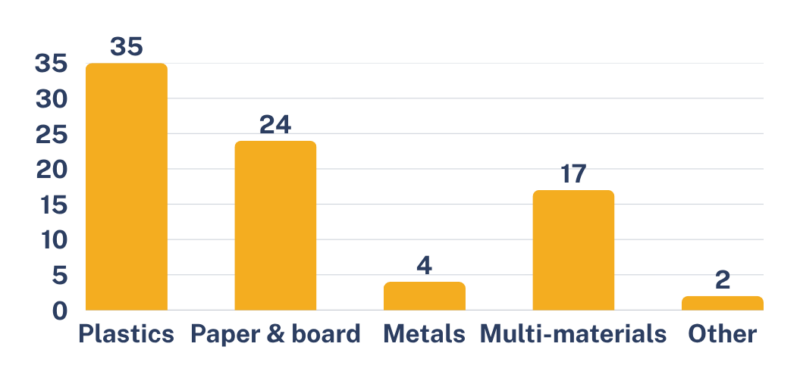
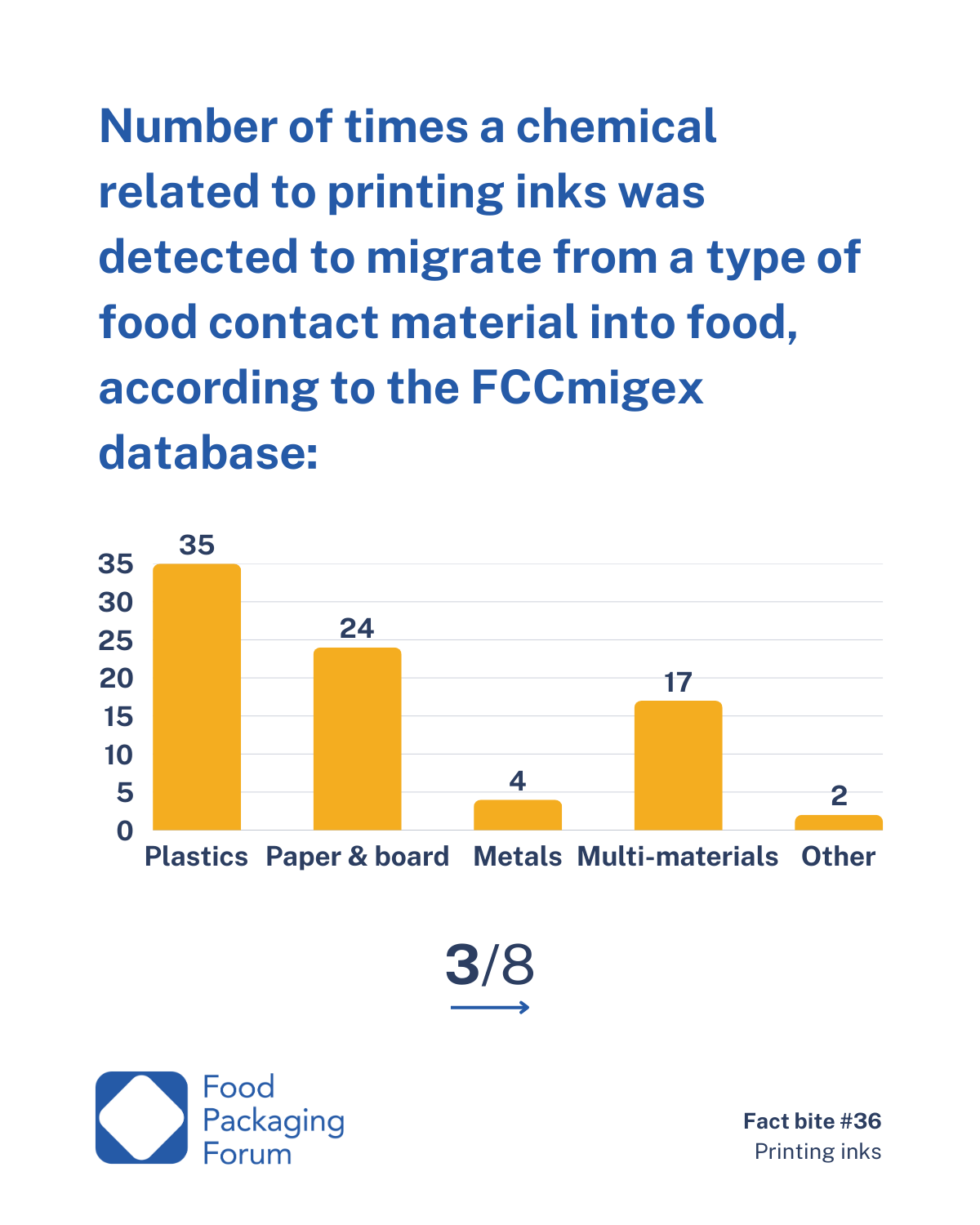
Number of times a chemical related to printing inks was detected to migrate from a type of food contact material into food, according to the FCCmigex database
Numerous studies have found printing inks, or substances used in them, in food. This can mainly occur through three different pathways.
Depending on a material’s permeability, printing inks can seep through packaging and migrate into food. Metal and glass packaging avoid this migration as they have no permeability, whereas materials such as paper and board can be highly permeable and allow high levels of migration.
Printing inks can also transfer to the inside of a food contact article when it comes into contact with the printed, outside layer of another article. This process is called off-set migration and can occur, for example, when printed sheets of beverage carton are stored in rolls, or when paper cups are stacked into each other.
Recycled paper in food contact materials can be a challenge (and health hazard) because it can be contaminated with non-food contact grade printing inks such as those used in newspapers or magazines.
While there remains to be a lack of harmonized regulation to manage printing inks in food contact materials in Europe, Switzerland was the first country to issue a positive list for printing inks (in 2010), which contains more than 5,000 substances.
