
Fact bite #54

Breast carcinogens

October is breast cancer awareness month – a time to celebrate survivors and progress made, remember those lost, and reflect on prevention measures. 

As cancer is one of the few health endpoints specifically targeted in current FCM regulations and testing, carcinogenic chemicals in food packaging and other food contact materials and articles should not be commonplace.

We recently updated our database on migrating and extractable food contact materials (FCCmigex). By comparing with the @Silent Spring Institute’s list of potential breast carcinogens, we identified 230 food contact chemicals found in food packaging and processing equipment with potential or confirmed links to breast cancer. This is up from 189 potential breast carcinogens identified in 2024. 

77% were found in plastics. 113 were detected to migrate into food from studies published within the last five years. 6 of those are confirmed mammary carcinogens in rodent models. 

“Our findings imply that chronic exposure of the entire population to suspected mammary carcinogens from FCMs is the norm and highlights an important, but currently underappreciated, opportunity for prevention,” the original study from 2024 concludes.

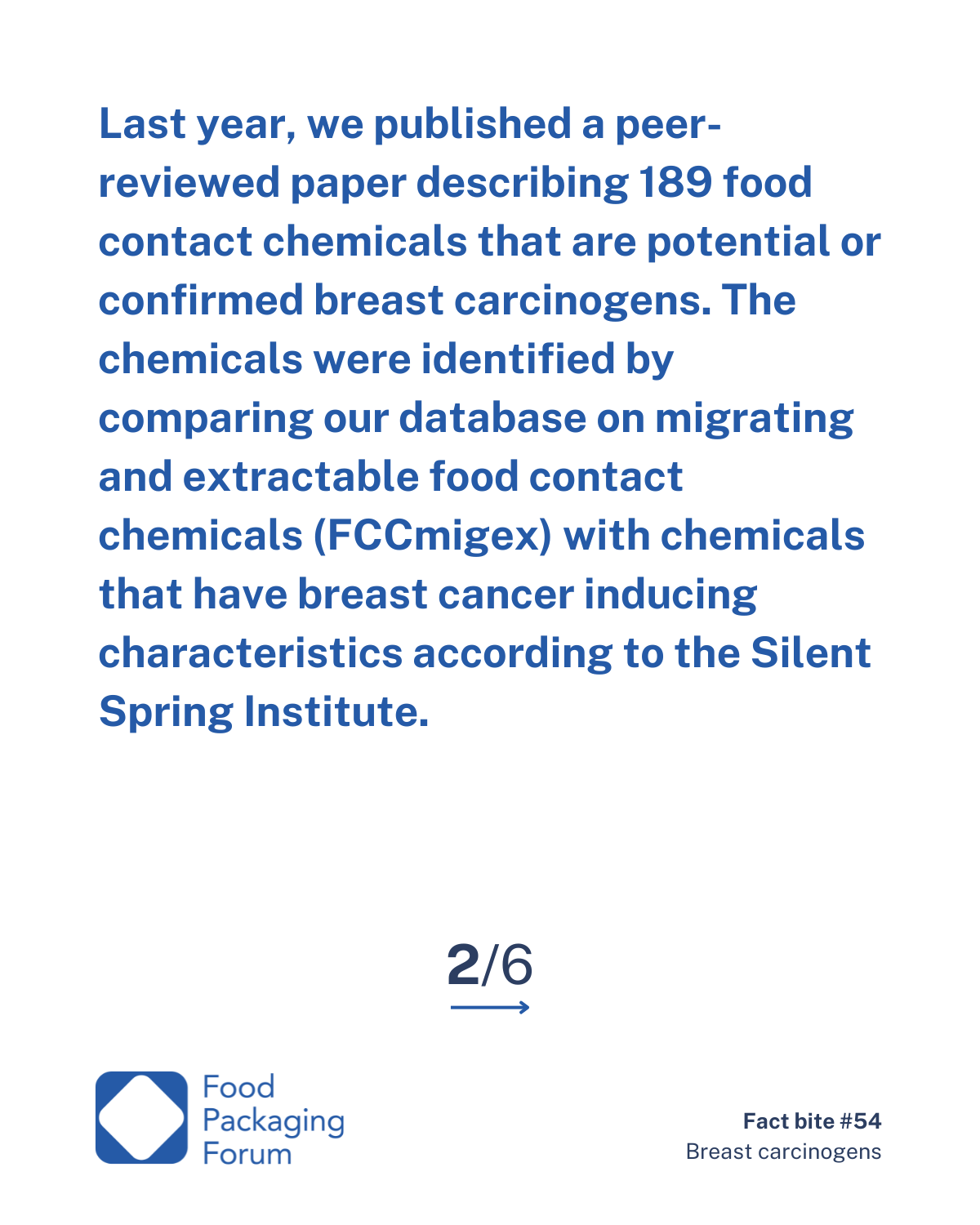
In 2024, we published a peer-reviewed paper describing 189 food contact chemicals that are potential or confirmed breast carcinogens.

The chemicals were identified by comparing our database on migrating and extractable food contact chemicals (FCCmigex) with chemicals that have breast cancer inducing characteristics according to the Silent Spring Institute.

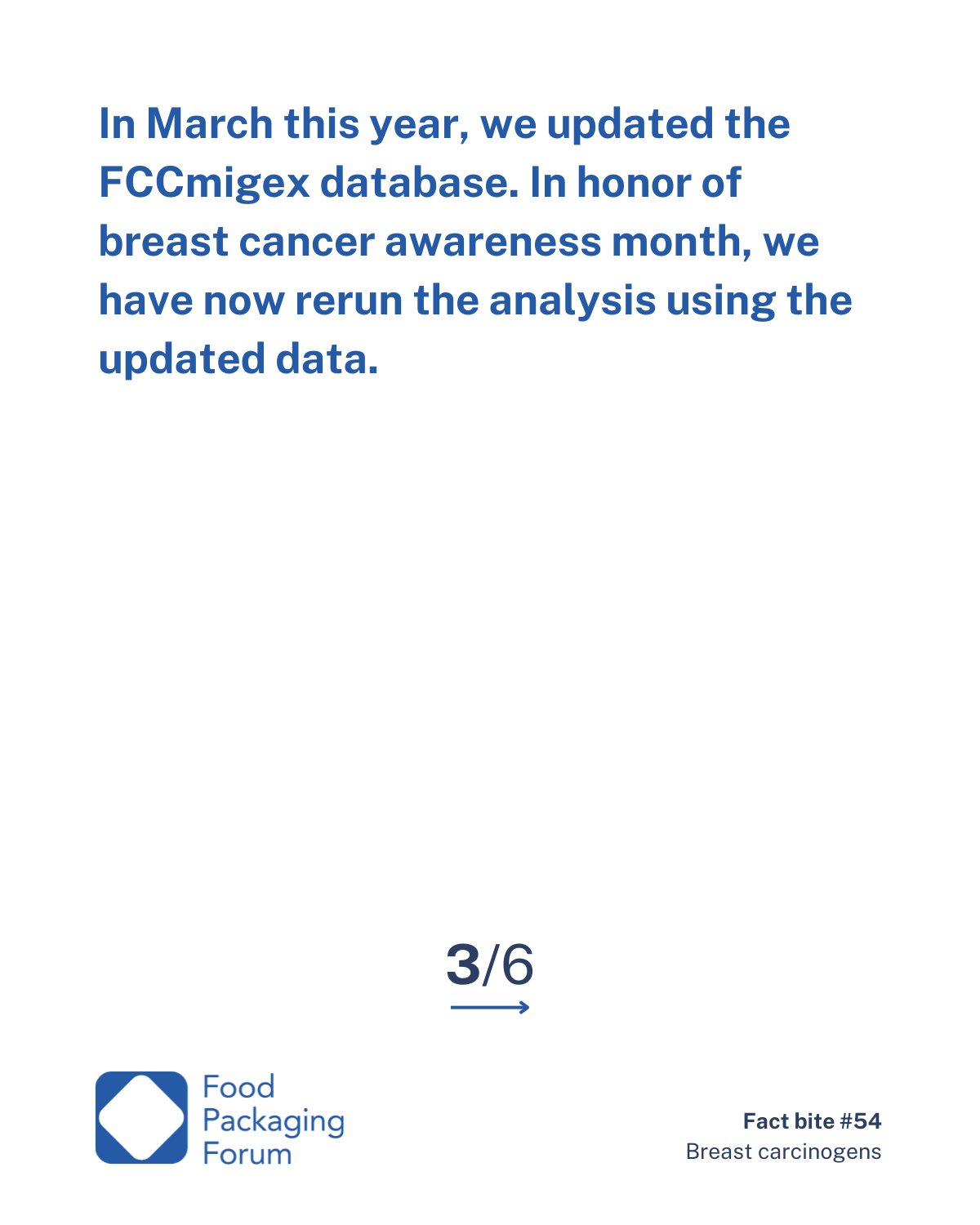
In March of 2025, we updated the FCCmigex database. In honor of breast cancer awareness month, we have now rerun the analysis using the updated data.

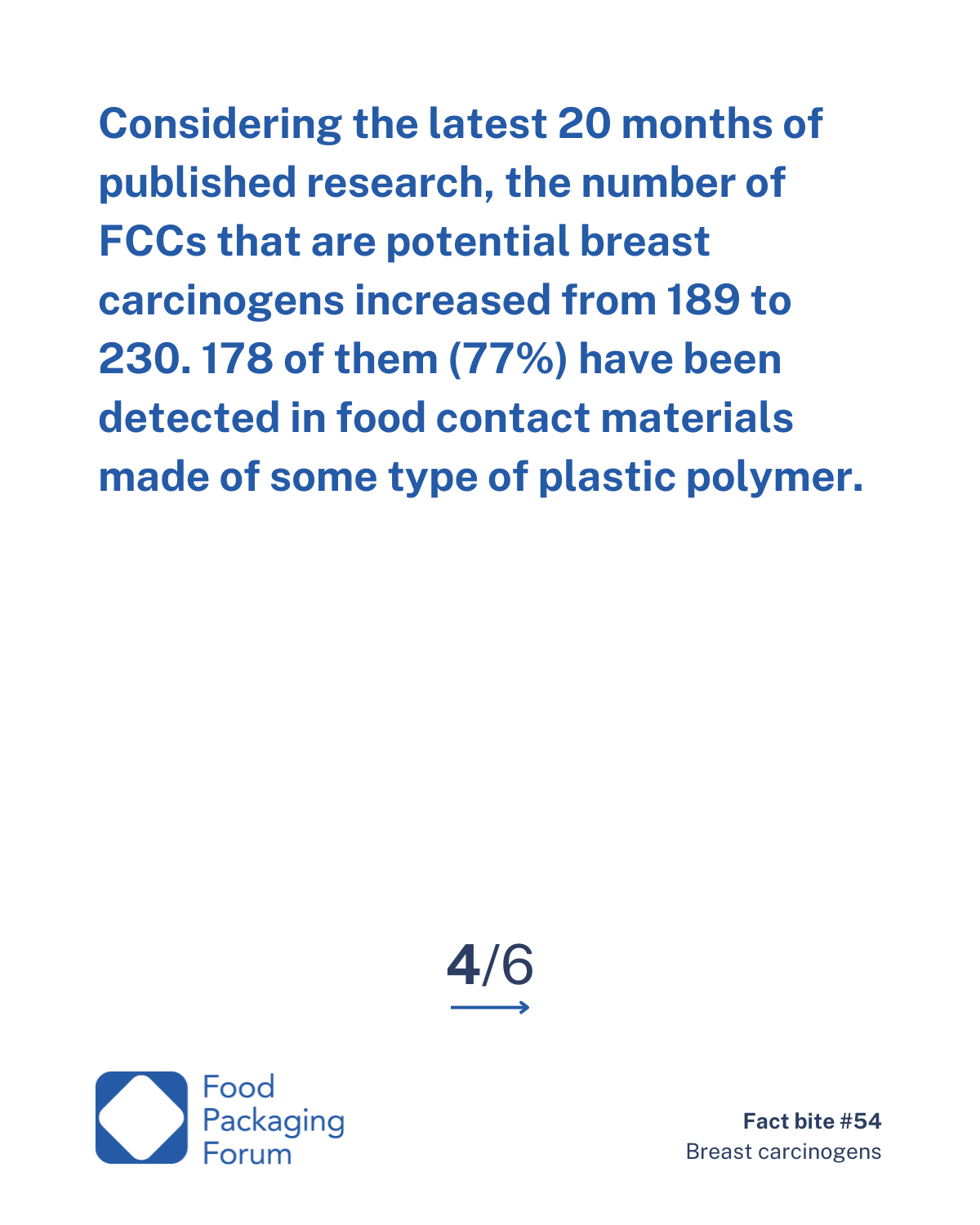
Considering the latest 20 months of published research, the number of FCCs that are potential breast carcinogens increased from 189 to 230. 178 of them (77%) have been detected in food contact materials made of some type of plastic polymer.

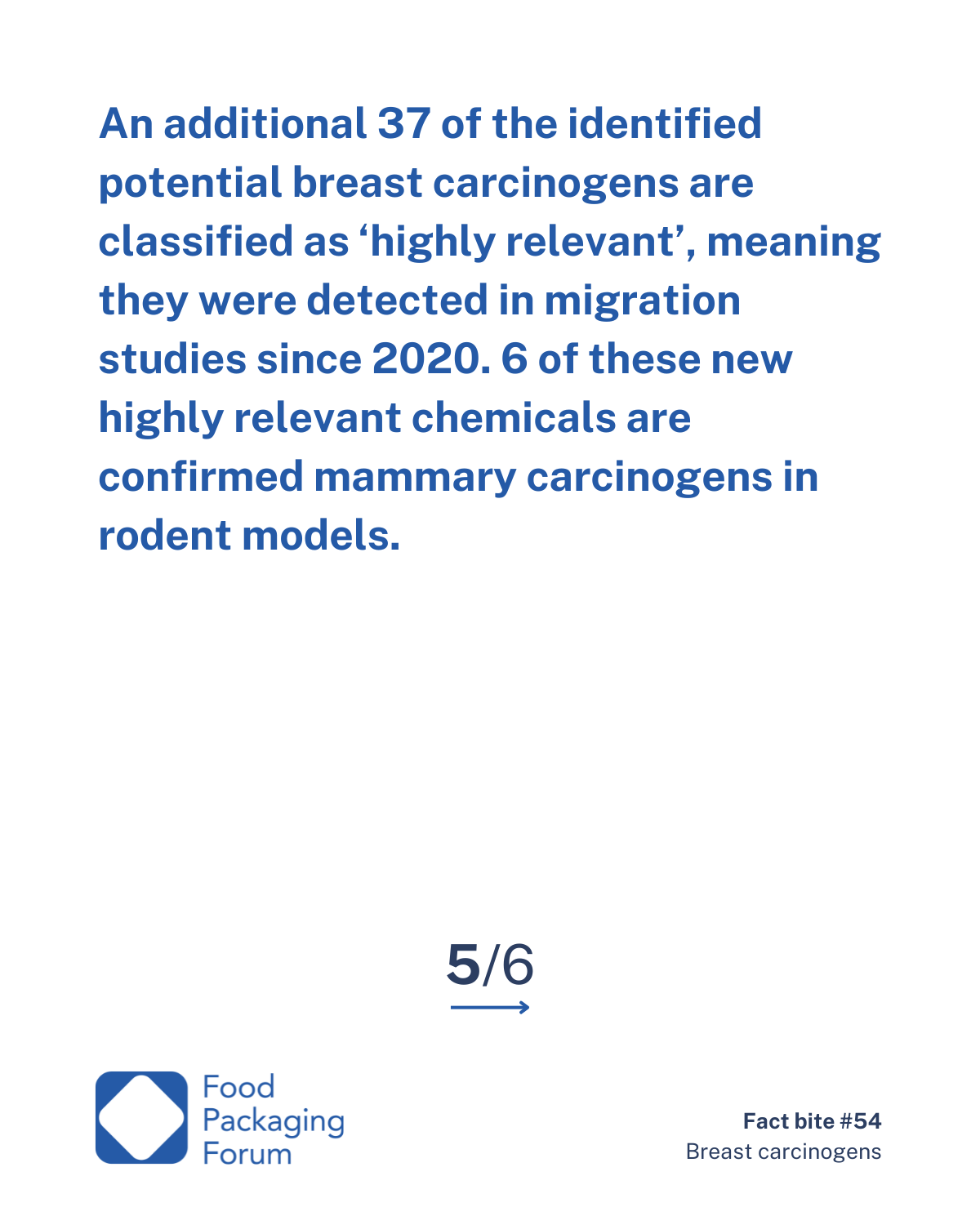
An additional 37 of the identified potential breast carcinogens are classified as ‘highly relevant’, meaning they were detected in migration studies since 2020. 6 of these new highly relevant chemicals are confirmed mammary carcinogens in rodent models.

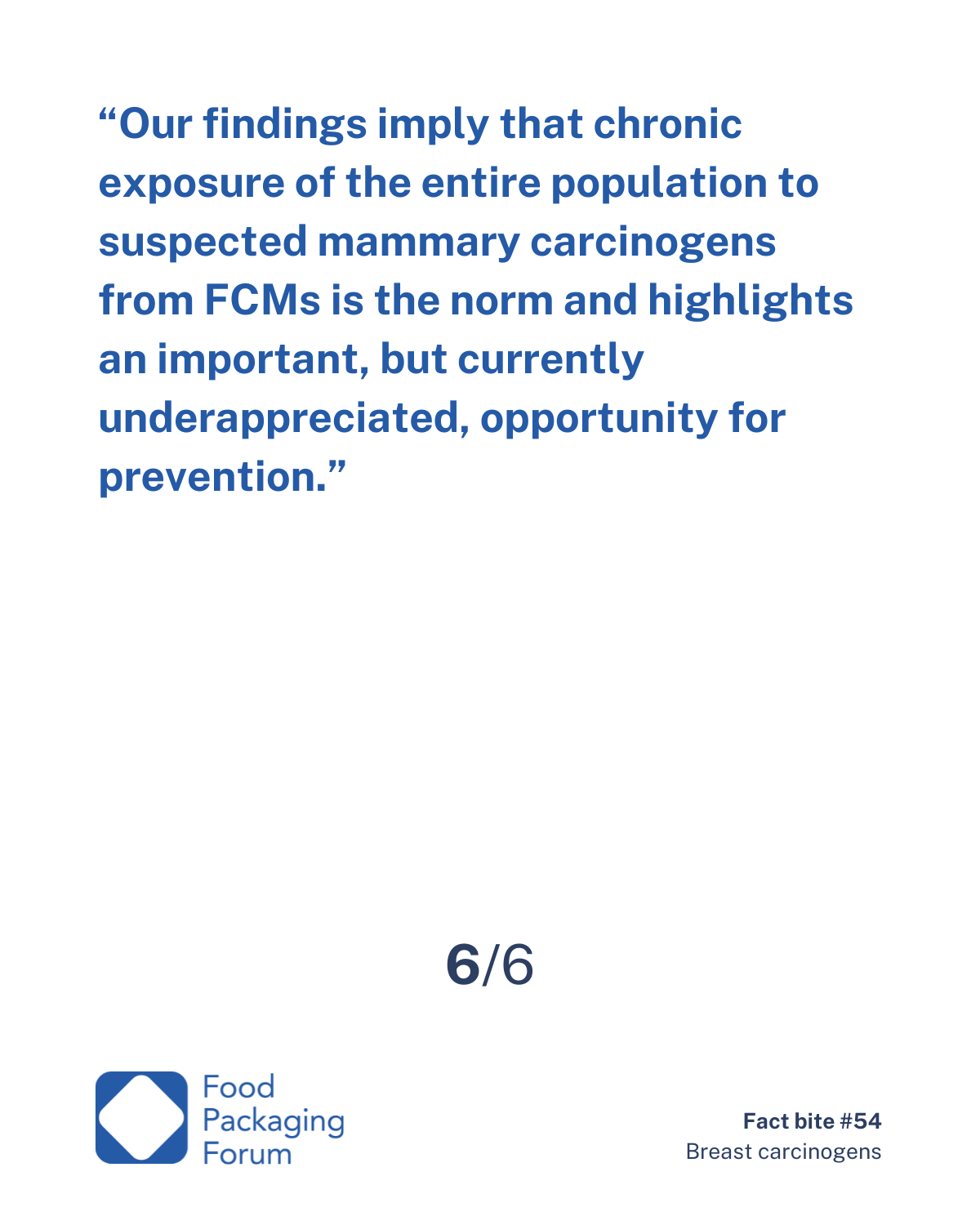
“Our findings imply that chronic exposure of the entire population to suspected mammary carcinogens from FCMs is the norm and highlights an important, but currently underappreciated, opportunity for prevention.”

Scroll to Top