
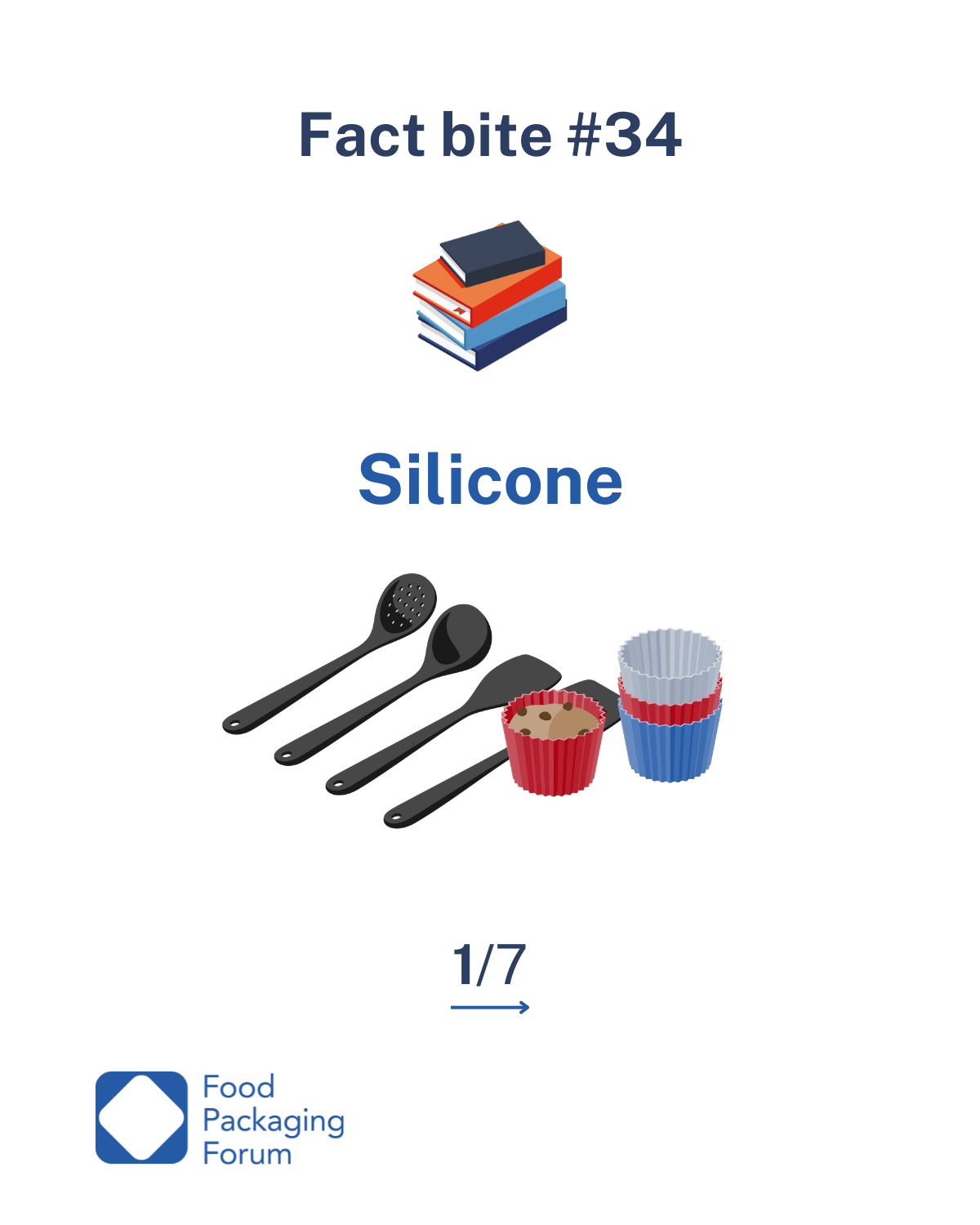
Silicones are synthetic polymers with a backbone of silicon and oxygen atoms, commonly found as fluids, rubbers, or resins.
The most well-known type is PDMS (polydimethylsiloxane), which is used across many food-related applications.
From baking molds to baby bottle nipples, silicones are found in many household and industrial food contact items. They are also used as release agents, lubricants, anti-foaming agents, and coatings in food packaging and processing equipment.
Substances such as siloxane oligomers, catalysts, and additives can migrate from silicone into food—especially into fatty foods or during initial use.
Published scientific studies found that most silicone kitchenware tested caused cell toxicity or interacted with hormone systems. And some studies found chemical migration levels exceeding legal limits in early testing cycles or migrating known substances of very high concern (SVHCs).
While silicone is legally recognized as a food contact material in the EU, there is currently no harmonized regulation to guide its safe use. Instead, stakeholders have to rely on following a patchwork of national laws and recommendations
Research is ongoing to better understand chemical migration from silicones and assess their long-term safety.
